10 effect specs
Liquid glass effects
The optical effects that make up liquid glass, and the two accent materials that go with it: what each looks like, where it belongs, what to avoid and its parameters.
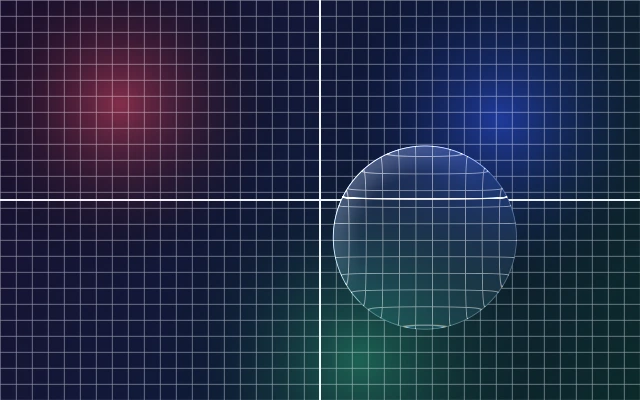 RefractionThe scene behind is bent and magnified through the shape: strongest in the bezel band along the edge, calm in the centre.
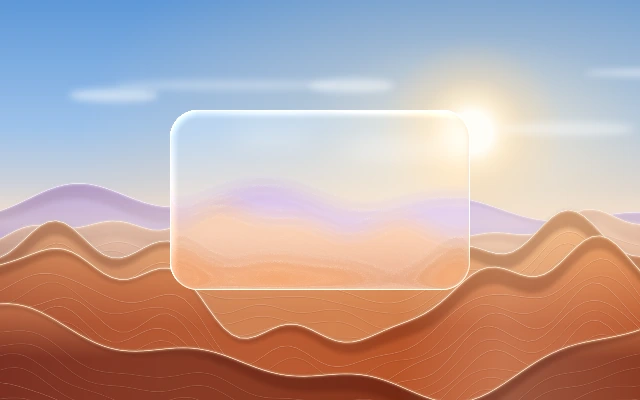 FrostThe backdrop behind the glass turns into soft colour, with a faint grain; edges still bend.
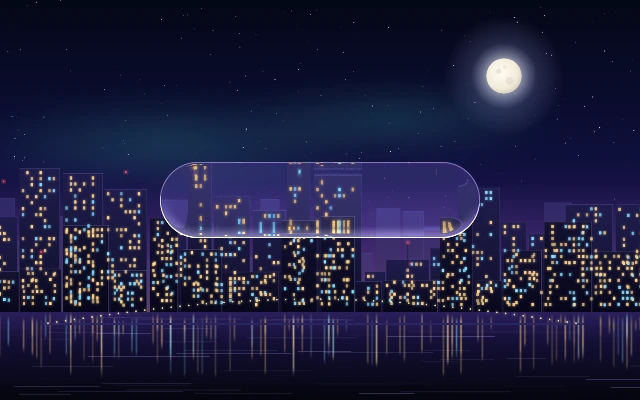 SpecularA thin bright line hugging the silhouette, brightest where the edge faces the key light (top-left): on a wide capsule the whole top edge and left cap; a dimmer counter-light along the bottom edge and right cap; a soft glow just inside the edge.
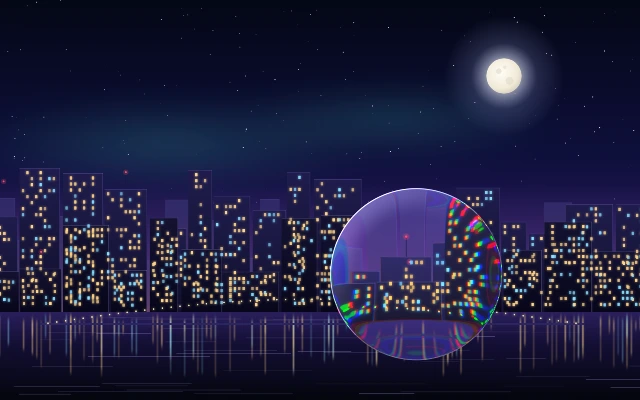 DispersionA thin rainbow fringe where the glass bends the most — red and blue images separate by 1–3 px at the silhouette; in thick crystal, bright points split into spectra.
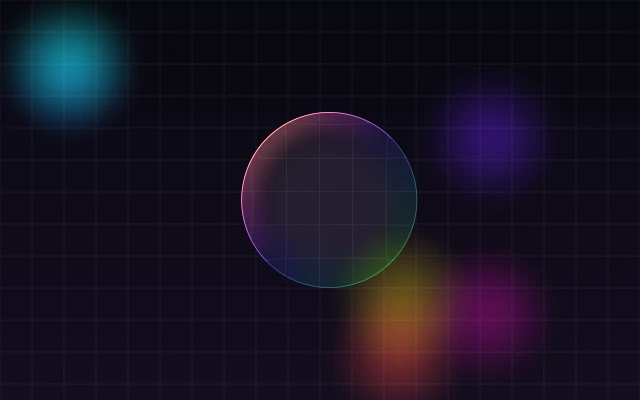 IridescenceView-dependent rainbow sheen like a soap bubble or oil film: hues shift with the angle and thickness, strongest near grazing edges, usually over clear glass.
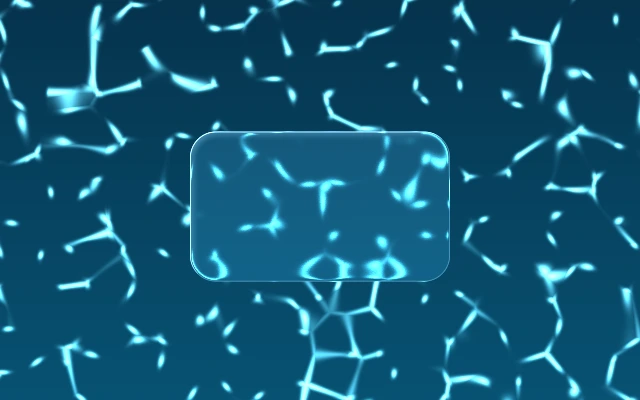 CausticsBright, wavy, focused light lines and cells — the network of light at the bottom of a pool or cast by a glass on a table.
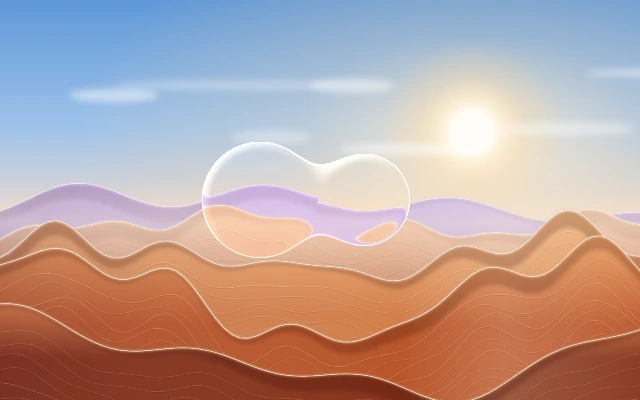 MorphGlass bodies behave like liquid: when they come closer than their merge spacing they fuse with a smooth neck; indicators stretch while moving; a button can swell into a menu.
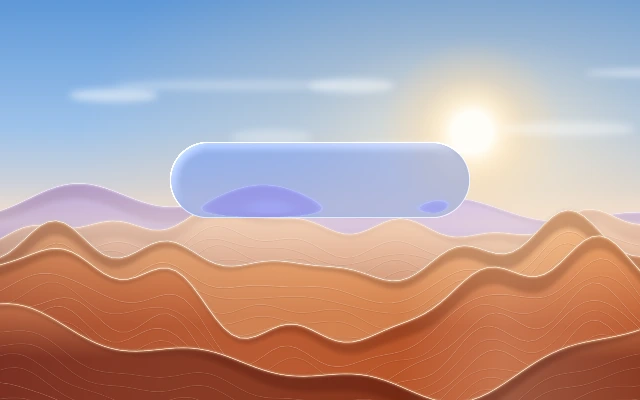 TintGlass carrying colour: accent or danger tint laid over the refraction while the backdrop still shows through and bends.
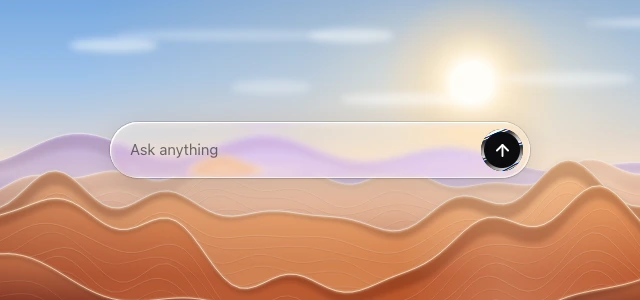 Liquid metalOpaque, mirror-polished metal that behaves like liquid.
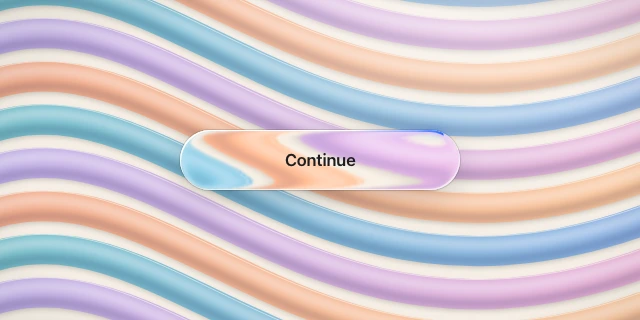 Border beamA short arc of light travels along the silhouette at one constant speed: a bright head as thin as the rim (1–2 px, white or accent) fading to nothing along a tail of 15–35 % of the perimeter, wrapping corners and caps without changing width, length or speed.